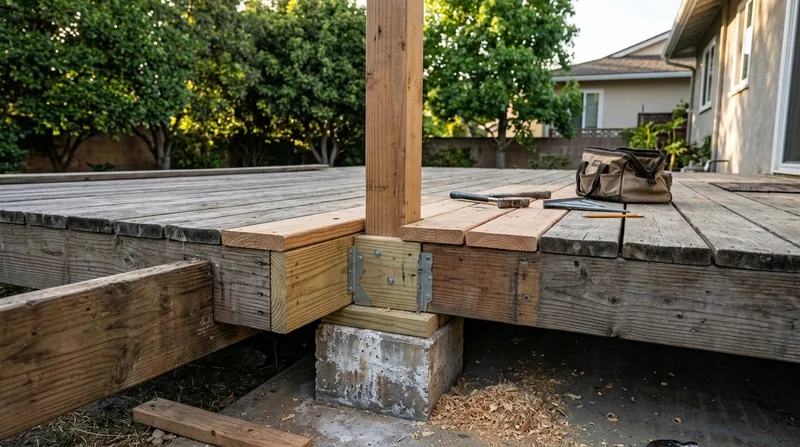




Long Beach's coastal humidity and salt air accelerate wood rot on decks and porches, rotting boards and structural framing faster than homeowners expect. The marine layer that rolls in off the Pacific, combined with sandy and clay soils beneath the city's flat basin, creates a perfect storm for moisture infiltration and decay. Whether you own a classic Craftsman Bungalow in Bluff Park, a Spanish Colonial Revival home in California Heights, or a mid-century ranch in Bixby Knolls, your outdoor wood surfaces are under constant assault from salt spray, fog, and standing water. We provide Deck & Porch Repair in Long Beach that focuses on repair first, honest assessment of what can be saved, and structural integrity that keeps your home safe and your investment protected. Our work covers rotted boards and posts, failing stairs and railings, and the structural framing underneath. If you're noticing soft spots, discoloration, or movement in your deck or porch, that's wood rot at work, and the sooner you address it, the less damage spreads. We help Long Beach homeowners understand what they have, what needs to come out, and what can be restored.
Why Deck & Porch Repair Matters in Long Beach's Coastal Climate
Long Beach sits on the Newport-Inglewood fault line and directly faces the Pacific Ocean, which means your decks and porches get hit with salt-laden humidity year-round. Unlike inland areas where rot is seasonal, our marine layer keeps wood damp and vulnerable every single month. Redwood and Douglas fir, the traditional framing materials in older Long Beach homes, are naturally rot-resistant, but even they fail when moisture stays trapped in the wood grain. A rotted deck post doesn't just look bad, it shifts the load to surrounding structure, and a failing stair stringer becomes a safety issue. Early repair stops the spread and costs far less than waiting for structural failure.
- We inspect deck framing, posts, and railings for soft wood, discoloration, and structural movement.
- We identify the source of moisture (poor drainage, flashing failure, standing water) so the repair lasts.
- We replace rotted boards and posts while keeping sound structure in place whenever possible.
- We repair or replace stairs and railings to meet current safety standards and local code.
- We document damage for insurance claims if your policy covers weather-related wood failure.
Catching rot early saves you money and keeps your outdoor spaces safe for family and guests.
Key info: Long Beach's coastal salt air and marine humidity are the primary drivers of deck and porch rot. Unlike dry climates, our fog and spray mean wood stays damp even when it looks dry. A deck inspection every two to three years catches problems before they become structural failures.
For more on identifying wood rot in your home's framing, see our guide to Wood Rot & Dry Rot Repair in Long Beach.
How We Repair Decks and Porches in Long Beach: Our Process
Our approach starts with a thorough site visit to understand what you have, where the moisture is coming from, and what's salvageable. We don't assume everything needs replacement, and we don't recommend work you don't need. We measure, assess the structural condition of posts, joists, and ledger attachment, and then propose a repair plan that's honest about costs and timeline. If a board can be patched, we patch it. If a post has failed, we sister a new one or replace it outright. We work systematically and keep your home secure throughout the process.
- We perform a detailed deck and porch inspection, checking all posts, joists, railings, stairs, and the ledger board attachment to your home.
- We identify rotted wood, moisture sources, and structural movement or sagging.
- We provide a written estimate that breaks down which boards and framing need replacement, which can be repaired, and the cost for each.
- We schedule the work and remove only the damaged material, taking care not to disturb sound framing or your home's exterior.
- We install new material (typically pressure-treated lumber or redwood where appropriate) and ensure proper drainage and flashing to prevent future rot.
- We test stairs, railings, and posts for safety and stability before we consider the job complete.
This methodical approach means no surprises and no unnecessary tear-outs.
Example: A homeowner in Belmont Heights noticed a soft spot on the rim joist where her deck ledger was bolted. We removed the bolts, cut out the rotted section, sistered a new pressure-treated rim joist alongside the existing framing, reinstalled the ledger with flashing, and re-bolted it to spec. The rest of the deck structure was sound, so we didn't tear it out. Total cost was roughly half what a full replacement would have been, and the repair is as solid as new construction.
For structural issues that involve load-bearing walls or major beam work, see our page on Beam Replacement & Load-Bearing Wall Removal.
Deck & Porch Repair Methods and When to Use Each
| Approach | Description | Best for |
|---|---|---|
| Board or Plank Replacement | Remove rotted deck boards or porch planks and install new pressure-treated or redwood lumber, maintaining the original pattern and fastening. | Surface rot, weathered boards, isolated damage not affecting the underlying frame. |
| Post and Joist Repair or Replacement | Remove rotted deck posts, rim joists, or floor joists and replace with new pressure-treated lumber, properly bolted and flashed to prevent future moisture entry. | Structural rot in posts, rim joists, or band boards; failed ledger attachment; sagging or movement in the deck frame. |
| Sistering or Reinforcement | Install a new joist or post alongside a weakened but partially sound member, bolting them together to share the load and extend the life of the assembly. | Partial rot in structural members; cost-effective alternative to full replacement when the existing frame is still contributing some strength. |
| Stair Tread and Railing Repair | Replace rotted treads, stringers, or balusters; repair or replace handrails and newel posts to meet current safety codes and prevent falls. | Soft or cracked treads, wobbly railings, loose or missing balusters, compromised handrails. |
| Ledger Board Repair and Flashing | Remove and replace rotted ledger boards, reinstall with proper flashing (metal or synthetic) to divert water away from the rim joist and band board of your home. | Rot at the deck-to-house connection; failed or missing flashing; water intrusion into the home's rim joist or band board. |
Each method is chosen based on the extent and location of the rot, the age and condition of the surrounding wood, and the cost trade-off between repair and replacement. We assess and recommend the most durable and cost-effective path for your specific situation.
Deck & Porch Repair Cost in Long Beach: What to Expect
Deck and porch repair costs in Long Beach start at around $900 for straightforward board replacement on a small section, and can range from $2,500 to $8,000 or more for structural work involving posts, joists, or ledger repair. The primary factors that move the price are the amount of rotted wood to be removed, the accessibility of the damaged area, whether the repair is surface-level or structural, and the type of replacement material you choose. A single rotted post replacement might run $1,200 to $2,000, depending on size and access. A full ledger board replacement with new flashing could be $2,500 to $4,500. Stair and railing repairs range from $800 to $3,000 depending on the number of treads, balusters, and stringers involved.
Long Beach's coastal climate means that moisture and salt damage are predictable problems, which makes early intervention cost-effective. A small area of rot caught and repaired in year two costs far less than waiting until year five when the rot has spread to the frame. We recommend getting two to three estimates from local carpenters so you can understand the scope and compare pricing. Our estimate is free and comes with no obligation to book. For a detailed breakdown of typical repair costs and material options, visit our pricing overview.
Structural repairs that require a building permit (such as major joist or ledger replacement) may add permit costs and inspection fees, which vary by your local Long Beach building department. We can help you understand whether your project requires a permit, but the final determination rests with your city or county building authority. If your homeowner's insurance covers weather-related wood damage, we can document the damage and provide detailed invoices to support your claim.
Deck & Porch Repair Near Me: What to Look for When Hiring a Contractor in Long Beach
Finding a trustworthy carpenter for deck and porch work in Long Beach means looking for someone who knows the local climate challenges, explains the problem clearly, and doesn't recommend replacement when repair is the honest answer. Ask potential contractors whether they've worked on homes in your neighborhood (Bluff Park, Belmont Heights, Rose Park, or wherever you are) and what they found in terms of rot patterns and moisture sources. A carpenter who understands that Long Beach's salt air and marine humidity create specific failure modes will approach your project differently than someone from inland.
When you call or meet with a contractor, ask for references from recent deck and porch jobs in the Long Beach area. Check that they carry full insurance covering general liability and workers' compensation. Get written estimates from at least two contractors so you can compare scope, materials, and pricing. Ask whether the estimate includes a site visit and a detailed breakdown of what's being repaired or replaced. If your deck or porch is older or historic (many Long Beach homes from the 1920s and 1930s have original decking or period details), ask whether the contractor has experience matching materials and working with heritage structures. Some HOAs in Long Beach neighborhoods require approval for exterior changes, so check your CC&Rs before you start. Finally, confirm that the contractor understands local building code requirements for railings, stair construction, and ledger attachment, and whether a permit is needed for your specific repair.
Ready to get started? Contact us for a free estimate at (562) 418-6699. We respond within 24 hours and can usually schedule an inspection within a few days.
Deck & Porch Repair in Long Beach: Pricing Guide
| Service | Price | Details |
|---|---|---|
| Board Replacement | Starting at $900 | Single or multiple deck boards or porch planks, including removal, material, and installation with proper fastening and drainage. |
| Post or Joist Repair | Starting at $1,500 | Rotted deck post or joist removal and replacement with new pressure-treated lumber, bolting, and flashing to prevent future moisture entry. |
| Ledger Board Repair with Flashing | Starting at $2,500 | Removal of rotted ledger, installation of new board, metal flashing, and proper bolting to the rim joist of your home's exterior. |
| Stair and Railing Repair | Starting at $1,200 | Replacement of rotted treads, stringers, balusters, or handrails; cost depends on number of steps and extent of structural damage. |
| Complex or Large-Scale Repair | On estimate | Multiple structural elements, extensive rot, or repairs requiring permits need an on-site assessment before a firm price can be quoted. |
| Free Estimate and Travel | No charge | Included in Long Beach and surrounding service areas, with response within 24 hours at (562) 418-6699. |
Indicative pricing, the exact cost depends on square footage, finish, and site access. Free personalized estimate within 24h at (562) 418-6699.


