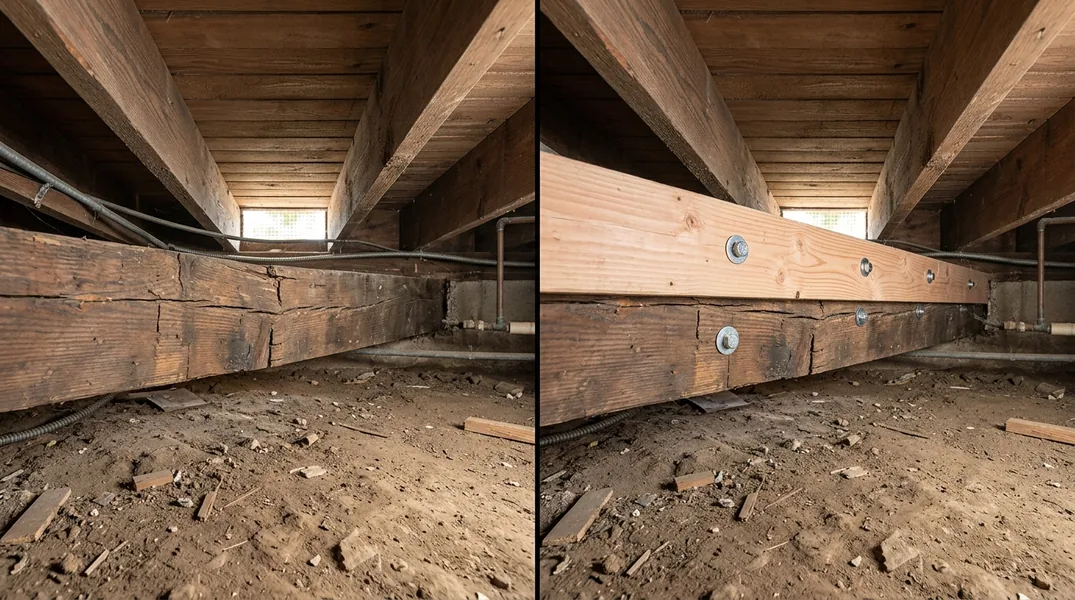
Why Old Long Beach Bungalows Develop Sagging Floors
If you own one of Long Beach's charming early-20th-century bungalows, you've probably noticed the telltale signs: a slight dip in the living room, a marble rolling across the kitchen floor, or doors that swing shut on their own. Sagging floors are a common issue in older homes, and they're almost never cosmetic. They signal underlying structural problems that need attention.
The primary culprits behind sagging floors in vintage Long Beach homes are deteriorating floor joists, settling foundations, and moisture damage. Many of these bungalows were built in the 1920s and 1930s, when building codes were far less stringent and materials were sometimes inferior by modern standards. Over decades, wood joists weaken from age, moisture exposure, and pest damage. Foundation settling, especially in areas with clay soil or poor drainage, exerts uneven pressure on support beams and posts. The result is a floor that sags in the middle or at the edges, creating both safety and comfort concerns for homeowners.
Foundation Problems and Their Connection to Sagging Floors
A sagging floor often begins with foundation issues. When a home's foundation shifts, settles unevenly, or develops cracks, the support system above becomes compromised. Posts and beams that once rested solidly on the foundation may now sit at angles or have gaps between them and their support points. This uneven settling is particularly common in older Long Beach homes built before modern foundation engineering and proper moisture barriers were standard.
Poor drainage around the foundation is another major factor. When water pools around the perimeter of your home, it seeps into the soil, causing it to expand and contract with seasonal changes. This movement destabilizes the foundation, which in turn affects the floor structure above. Additionally, if your home has a crawl space without proper ventilation or vapor barriers, moisture accumulates beneath the floor system, accelerating the decay of wooden joists and beams. Addressing foundation problems early often prevents more costly floor repairs down the road, which is why a professional inspection is critical if you notice any sagging.
Floor Joist Damage: Rot, Termites, and Structural Failure
Floor joists are the horizontal wooden beams that support your flooring. In older homes, these are often the first structural elements to fail. Wood Rot & Dry Rot Repair is one of the most common reasons joists weaken and sag. Dry rot, in particular, is insidious because it can spread through wood without obvious external signs, hollowing out the interior and leaving the surface intact until failure is imminent.
Termites and other wood-boring insects also pose a serious threat to floor joists. Termite Damage Repair is essential if you discover active infestations or evidence of past damage. A single joist weakened by termites or rot can compromise the entire floor system, especially in homes where joists are spaced further apart or are undersized by modern standards. When multiple joists are affected, the floor loses its ability to distribute weight evenly, resulting in noticeable sagging, bouncing, or soft spots. Professional evaluation is necessary to determine the extent of damage and whether joists can be reinforced or must be replaced.
Sistering Floor Joists and Other Repair Methods
Floor Joist & Subfloor Repair comes in several forms, depending on the severity of damage and the structural requirements of your home. Sistering floor joists is one of the most effective and commonly used techniques. This method involves fastening a new, pressure-treated or solid wood joist alongside a damaged or weakened existing joist. The two joists work together to distribute the load, effectively doubling the support capacity of that section of the floor. Sistering is ideal when rot or damage is localized to certain joists and the foundation is stable.
In cases where joists are severely compromised or multiple joists are failing, full joist replacement may be necessary. This is more invasive and costly than sistering but ensures the floor system is restored to proper strength. Sometimes, Beam Replacement & Load-Bearing Wall Removal work is required if the main support beams under the house have failed. Support posts may also need adjustment or replacement if they've settled or are no longer making solid contact with the foundation. The specific repair method depends on a professional assessment of your home's structure, so getting a detailed inspection is the first step.
Sagging Floor Repair Cost in Long Beach: What to Budget
The pricing for sagging floor repair varies widely depending on the extent of damage, the number of joists involved, and whether foundation work is needed. A simple sistering job on one or two joists might cost between $1,500 and $3,500, while full joist replacement can range from $3,000 to $8,000 or more per joist. If your sagging is caused by foundation settlement or beam failure, costs can escalate significantly, potentially reaching $10,000 to $25,000 or beyond for comprehensive structural repair.
It's important to understand that these are estimates and actual costs depend on your specific situation. Homes with crawl space access are generally less expensive to repair than those with basements or slab foundations. The age and condition of your home, the materials used, and the accessibility of the damaged areas all influence final pricing. Long Beach Carpentry recommends getting a free estimate from a licensed contractor who can evaluate your specific floor system and provide an accurate quote. Delaying repairs typically increases costs, as minor sagging can worsen into major structural failure.
When to Call a Professional: Floor Repair Near Me
If you notice any signs of sagging floors in your home, don't wait to seek professional help. Early intervention can save thousands of dollars and prevent safety hazards. Signs that warrant immediate inspection include visible dips or waves in your flooring, doors and windows that stick or won't close properly, cracks in walls or plaster, and a bouncy or spongy feeling when you walk across certain areas. Musty odors in your crawl space or basement also suggest moisture problems that are likely affecting your joists.
Long Beach Carpentry serves homeowners throughout Long Beach with expert floor and structural repair services. Our team has years of experience diagnosing and fixing sagging floors in vintage bungalows and modern homes alike. We'll conduct a thorough inspection, identify the root cause of your sagging, and recommend the most cost-effective solution for your situation. Whether you need sistering, joist replacement, foundation repair, or a combination of services, we're here to restore your home's structural integrity. Contact us at (562) 418-6699 or visit our website to schedule your free estimate today.
Looking for a professional carpentry contractor in Long Beach? Long Beach Carpentry responds fast for all your carpentry needs.
Get a Free QuoteOur services: Wood Rot & Dry Rot Repair · Termite Damage Repair · Floor Joist & Subfloor Repair